 Top Brands, Extensive Selection
 Guaranteed Lowest Prices


All-Weather Wicker Furniture Care for Cleaning and Protection
Posted by Zing Patio on Oct 28th 2026
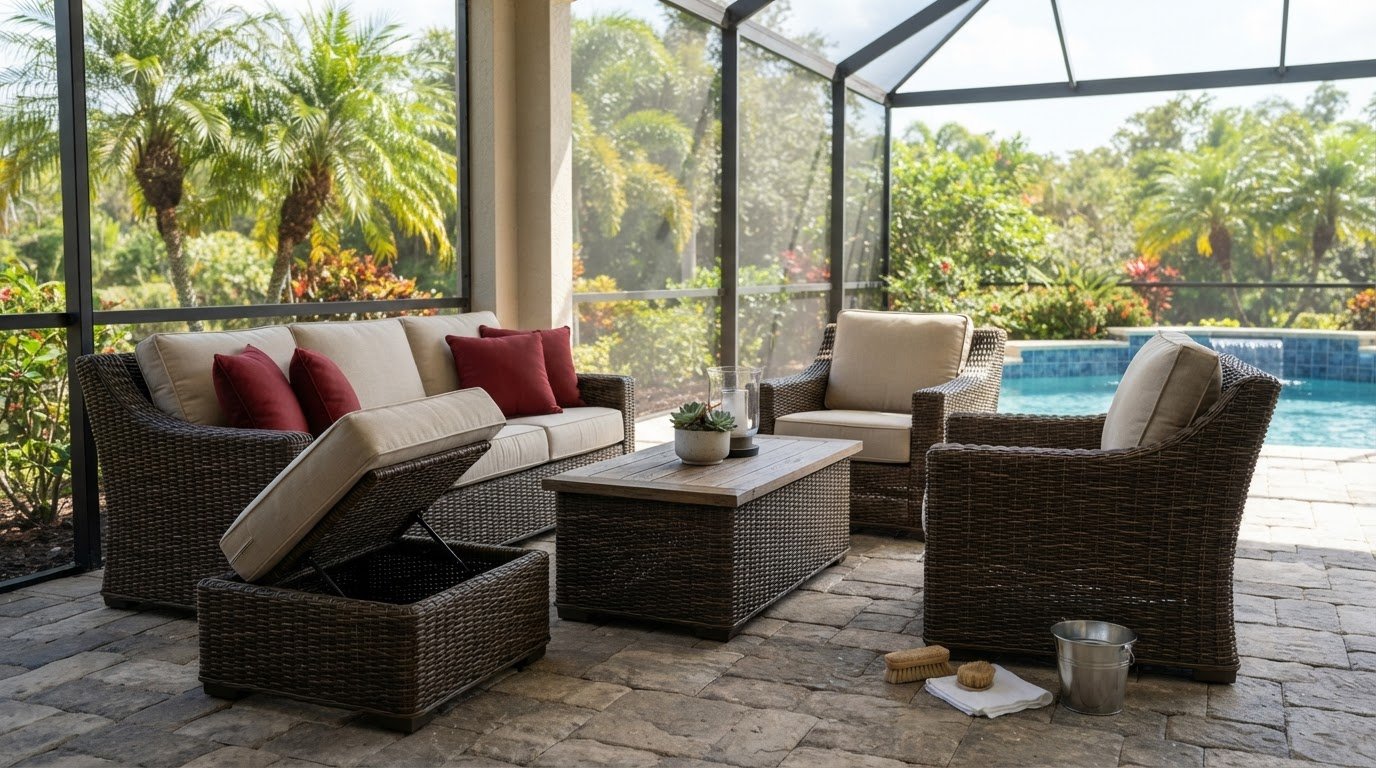
Dust all-weather wicker regularly, and clean and inspect it weekly or every other week during high-use seasons. Add a deeper clean and inspection in spring and fall. This routine helps you catch dirt and wear before they affect your outdoor setup.
In Southwest Florida, sun, rain, humidity, and coastal salt can challenge outdoor furniture, even when its weave is designed for outdoor use. In Naples, Fort Myers, Sarasota, and nearby communities, care tailored to the wicker type and its exposure helps keep lanais, pool areas, and entertaining spaces ready to enjoy.
Learn how synthetic all-weather wicker differs from natural wicker, how to clean it, and when to cover or store it during extreme weather. These practical steps can help limit moisture and prolonged sun exposure, keeping your outdoor space ready for relaxing and gathering.
1. Covering or storing outdoor furniture
In Southwest Florida, prolonged sun and rain can wear down outdoor furniture, including natural wicker fibers and painted finishes. Before extreme weather, move wicker beneath a roof or awning, especially if your lanai or pool deck has little shade. For effective all-weather wicker furniture care, choose a sheltered spot with good airflow.
Cover synthetic wicker during severe weather, or use a fitted patio furniture cover if moving it isn’t practical. A tarp can shield furniture from direct exposure, but secure it without pressing tightly against the weave. Once conditions improve, remove the cover so any trapped moisture can escape.
Should you cover or store all-weather wicker furniture in winter? If it stays outdoors, cover it; otherwise, store it indoors in a cool, dry area. If indoor storage isn’t an option, a roofed porch or awning provides shelter.
For loose or broken synthetic strands, follow the manufacturer’s or retailer’s repair instructions. For cracks or fading, use guidance specific to the material and finish instead of generic paint or repair products. This helps prevent further surface damage.
Brush debris from the weave before covering it, and inspect for mildew when uncovering the furniture. For a wicker seating area, browse patio furniture options with your space and storage needs in mind.
Choose between covering and storage based on whether the furniture is in use and whether it can be placed in a suitable area. Covering wicker furniture when it is not in use, or storing it during the rainy season, can help protect it from sun and water exposure. Either option can reduce exposure while the furniture is not needed, without requiring a change to the seating arrangement when it is in use.
A patio furniture cover can help protect wicker furniture when it cannot be placed in a suitable area. It offers a practical way to shield pieces that need to remain where they are. When storage is available during the rainy season, that is another option for limiting exposure. In either case, the purpose is to help protect the wicker from sun and water while it is not being used.
2. How do you protect outdoor furniture from extreme weather?
Southwest Florida sun and rain can gradually damage wicker, paint, and natural fibers. Position furniture to reduce constant direct sunlight, and remove cushions before heavy rain. Synthetic wicker handles humidity better than natural wicker, but still needs care in damp conditions and prolonged sun. During snow, freezing temperatures, or other extreme weather, move furniture to a protected area when possible.
For routine cleaning, brush or vacuum away loose debris, wash synthetic wicker with mild detergent and warm water, then rinse thoroughly. Let the weave dry completely before using the furniture. Clean cushions according to their care instructions, since fabrics and fillings can react differently to cleaning products.
For mold or mildew spots, treat the affected area with a mixture of white vinegar and water. Rinse with clean water, then let the furniture air-dry completely in the sun. For stains or algae, start with mild detergent and water, and rinse away all residue. Don’t leave cleaning products on the weave.
Keep wicker pieces away from standing water, which can weaken fibers. Rubber stops on rattan legs help keep lightweight furniture in place and protect the leg bottoms. Weather-resistant cushions can add comfort to wicker seats, and padded cushions suit cane seats more than 14 inches in diameter.
Furniture lifespan depends on its materials, exposure, and maintenance, so there’s no single lifespan for every piece. For a lanai or pool area, explore outdoor furniture options that suit your space and routine.
3. Using all-weather faux wicker outdoors
All-weather faux wicker is woven from synthetic materials such as resin, plastic, or fiberglass. Modern outdoor wicker commonly uses PVC or a poly-resin blend. “Wicker” describes the weaving technique, not the material, so identify the frame and weave before choosing care products.
Synthetic wicker is less prone to rot and splintering than natural wicker, making it a practical option for Southwest Florida lanais and poolside seating. It resists humidity and rain, but prolonged sunlight can still damage the surface. Position wicker where shade and airflow help limit constant exposure to sun and moisture.
Keep debris out of the weave, especially in tight gaps. Use a vacuum with a brush attachment or a soft brush, then wash the surface with mild detergent and warm water. Rinse thoroughly and let the furniture dry completely before use. Thorough drying matters because excess moisture can encourage mold or mildew, even on synthetic materials.
Check the weave and frame during routine cleaning. Look for loose strands, cracks, or fading, and follow the manufacturer’s care instructions for repairs or finish treatments. Avoid paint or solvents unless the care guidance recommends them, since products suited to one synthetic material may not suit another. Between uses, a cover or shaded position helps limit exposure to harsh sun and rain.
For a lanai or entertaining space, explore outdoor living ideas that fit your setting and care routine.
Zing Patio: Outdoor furniture collections
Zing Patio offers wicker patio furniture and outdoor collections for Southwest Florida lanais, pool areas, and entertaining spaces. Choose a patio furniture set for a coordinated look, or pair lounge chairs with an outdoor sectional to suit how you use the space.
Plan the care routine alongside the layout. A covered lanai can limit direct sun and rain, while poolside furniture may need more frequent cleaning and thorough drying. Choosing furniture suited to its setting makes it easier to keep each piece comfortable and ready for everyday use.
Explore options that fit your outdoor space, then visit shopatzing.com.
Make your outdoor space easier to enjoy
Choose wicker furniture with your space and daily routine in mind. A lanai for quiet mornings may call for lounge chairs, while a patio set can anchor outdoor meals and gatherings. In Southwest Florida, allow room for airflow and easy access when planning where each piece will go.
Good all-weather wicker furniture care starts with a setup you can maintain. Consider where cushions will go during storms, how you’ll reach the weave for cleaning, and whether you can move furniture under shelter when needed. These practical choices help keep your outdoor area ready to use, without making care feel like a chore.
Zing Patio offers outdoor furniture collections, patio furniture sets, and lounge chairs for different ways of enjoying the outdoors. Contact Zing Patio to explore options for your space, and take the next step toward a welcoming patio you’ll love using.
Frequently Asked Questions
How Often Should I Clean?
Clean outdoor furniture when soil, pollen, or food residue becomes visible, and dust the weave between deeper washes. In coastal areas, watch for salt collecting in crevices, as buildup can affect the wicker. A lanai used for outdoor dining may need cleaning after spills sooner than a shaded, lightly used seating nook.
How do you protect outdoor furniture from extreme weather?
Match protection to the material and location. Natural rattan is porous, so keep it away from persistent dampness and shelter it promptly in harsh conditions. Synthetic wicker tolerates more moisture, but prolonged ultraviolet exposure and standing water can still cause damage. After storms, check for debris lodged between the strands.
How often should you clean and inspect outdoor furniture?
Inspect outdoor furniture monthly for loose screws, cracked wood, and damaged strands. Check joints and contact points too, where movement or wear may first appear. At the start and end of the outdoor season, assess the full set, including areas beneath cushions and near the feet.
The Sun: Friend or Foe?
Sunlight can help furniture air-dry after cleaning, but prolonged direct exposure can damage natural wicker fibers and finishes. Use sunlight to help with drying, but don’t leave wicker in full sun all day. For a bright pool area, consider how the sun moves across the space before choosing a permanent spot.
How often should all-weather wicker furniture be cleaned?
Clean synthetic wicker when visible grime or residue collects in the weave, especially near salt air or pool splashes. Regular dusting keeps debris from settling into tight spaces. After washing, let the weave dry fully before adding cushions, so they don’t cover damp areas and airflow can reach the surface.
Disclaimer
Product selection, availability, and pricing are subject to change. Items shown online represent a sampling of our in-store inventory and may vary by location. Colors, finishes, and materials may appear differently due to lighting and display settings. Delivery timelines and product availability may vary. In-home design consultations are complimentary within standard service areas.